Lo sfarzo termale di Roma antica
I Romani trasformarono la cultura del bagno termale in una delle più straordinarie espressioni architettoniche e sociali dell’antichità. Come abbiamo ormai compreso, Roma non inventò il bagno termale: ne ereditò e sviluppò le conoscenze provenienti dal mondo greco, etrusco e mediterraneo, ma la capacità romana di progettare acquedotti, sistemi di riscaldamento, pavimenti sospesi, condutture e grandi edifici trasformò il bagno in una vera istituzione urbana. Le terme romane erano luoghi in cui le persone si incontravano, dove si conversava, si faceva esercizio fisico, si ricevevano ospiti, si discuteva di affari e di politica, si trascorreva il tempo libero. Le natura dell’esperienza termale era quindi profondamente sociale, e anche gli impianti annessi alle abitazioni private nobiliari potevano diventare luoghi di incontro tra ospiti e padroni di casa.
Le grandi terme imperiali rappresentavano una vera e propria città nella città.
Per portare tra i tanti un esempio esemplare, pensiamo alle Terme di Caracalla, un complesso che comprendeva enormi sale, piscine, palestre, giardini, spazi di servizio e ambienti monumentali rivestiti di marmi e decorati con mosaici e statue. La grande natatio, la piscina scoperta, era circondata da pareti enormi e da elementi architettonici che comprendevano anche un ninfeo. Questa architettura ci mostra che l’acqua era diventata una forma integrata di urbanistica. Per portare l’acqua nelle città servivano acquedotti; per distribuirla servivano condutture e serbatoi; per riscaldarla servivano forni di grandi dimensioni e avanzati sistemi di circolazione dell’aria calda; per accoglierla servivano grandi edifici. L’acqua entrava così nel cuore della civiltà romana: e i Romani dedicavano all’acqua tanto spazio quanto ai templi.
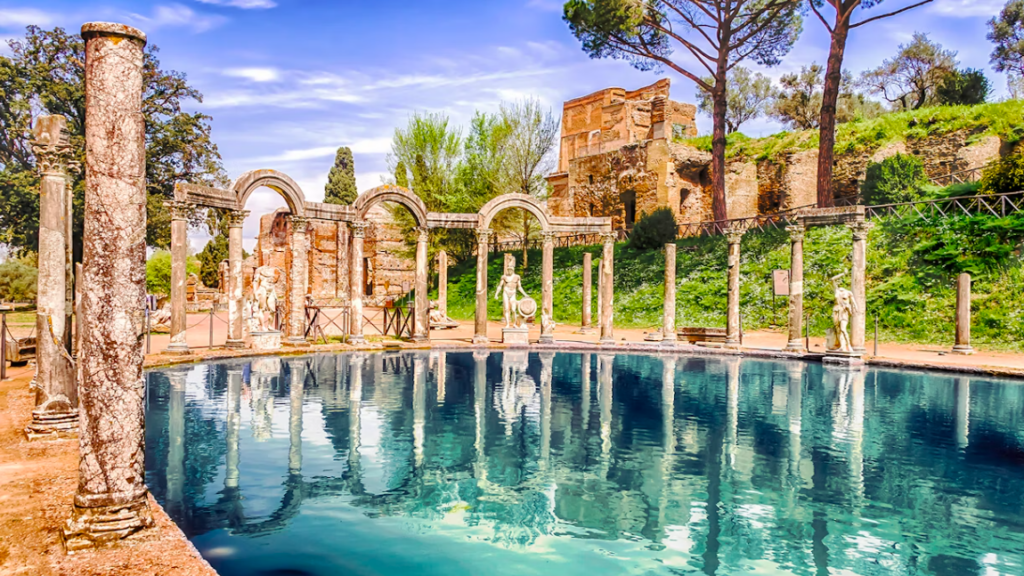
Le grandi terme erano soprattutto strutture urbane, destinate a un pubblico molto ampio. Parallelamente, però, la nobilta’ romane svilupparono nelle proprie ville una vera e propria estetica privata dell’acqua. Le ville potevano comprendere terme private, piscine, fontane, ninfei, giardini irrigati e giochi d’acqua. Un esempio straordinario è ancora una volta Villa Adriana a Tivoli. L’acqua diventava paesaggio, spettacolo, architettura, contemplazione, intimita’. Il complesso comprendeva edifici residenziali, grandi terme, ninfei, giardini, vasche, fontane e sistemi idraulici complessi. Vi erano la vaste piscine riflettenti, grotte, isole artificiali, giardini, ninfei monumentali e articolati sistemi architettonici legati all’acqua.
Il rituale romano di rigenerazione nell’acqua
Una visita alle terme era un percorso attentamente strutturato attraverso una sequenza di ambienti progettati per purificare, rilassare e rivitalizzare il corpo. I visitatori seguivano in genere un circuito che prevedeva un graduale passaggio attraverso diverse temperature.
L’esperienza iniziava nell’apodyterium, lo spogliatoio, dove venivano custoditi abiti ed effetti personali. Da lì, i bagnanti accedevano al tepidarium, una stanza calda progettata per preparare delicatamente il corpo alle temperature più elevate. Il tepidarium fungeva da spazio di transizione, consentendo alla circolazione di aumentare gradualmente. La fase successiva era il caldarium, una camera calda riscaldata da sofisticati sistemi a pavimento. Qui i visitatori si detossificavano intensamente in piscine di acqua calda e ambienti pieni di vapore. Quindi i bagnanti passavano al frigidarium, una grande sala con piscine di acqua fredda dove il corpo veniva rinfrescato e rinvigorito. Molti complessi includevano anche la natatio, un’enorme piscina all’aperto utilizzata per l’esercizio fisico. L’alternanza di ambienti caldi e freddi creava un ciclo fisiologico assai simile alle tecniche di idroterapia ancora oggi utilizzate. Questa sequenza favoriva la salute, la vitalità e la lucidità mentale.
Inoltre, il ciclo poteva essere personalizzato in base alle esigenze individuali e alle stagioni. In estate, ci si poteva rinfrescare nell’acqua fresca, mentre in inverno si potevano contrastare reumatismi e infiammazioni con bagni caldi e saune.
Il funzionamento di questi immensi complessi dipendeva da sistemi tecnologici avanzati: gli ingegneri romani usavano l’ipocausto, uno dei primi sistemi di riscaldamento centralizzato al mondo. Le fornaci generavano aria calda che circolava sotto i pavimenti rialzati e all’interno di cavità nelle pareti, riscaldando uniformemente intere stanze. L’acqua veniva distribuita attraverso tubature in piombo, terracotta e pietra, regolate da sofisticate valvole e serbatoi.
Enormi fornaci riscaldavano continuamente migliaia di litri d’acqua. I sistemi di drenaggio rimuovevano le acque reflue in modo efficiente, e i gradienti di temperatura erano attentamente controllati. La precisione di questi sistemi stupisce ancora oggi gli ingegneri, giacche’ gran parte di questa conoscenza pratica sul benessere andò parzialmente perduta dopo il crollo dell’Impero Romano d’Occidente e non sarebbe stata eguagliata in Europa per molti secoli.


Le Terme di Caracalla e le Terme di Diocleziano
Le Thermae Antoninianae furono costruite tra il 212 e il 216 d.C., sul Piccolo Aventino, sotto l’imperatore Caracalla. Il complesso fu inaugurato nel 216 e venne poi restaurato più volte e si estendevano e potevano ospitare fino a circa mille visitatori al giorno. I sotterranei attualmente conservati si estondono per circa 2 km, e contenevano forni, caldaie, impianti idrici, depositi e persino un mitreo, un luogo di culto per i rituali iniziatici legati al dio Mitra. Per quasi un secolo furono il più grande complesso termale pubblico di Roma. Il complesso circostante comprendeva parchi, giardini paesaggistici, viali ombreggiati, campi da ginnastica, sale conferenze e grandi biblioteche. I visitatori potevano trascorrere un’intera giornata alternando esercizio fisico, bagni, lettura, conversazione e relax.
Quasi un secolo dopo, tra 298 e 306 d.C., furono costruite le Terme di Diocleziano, nell’area tra il Viminale e il Quirinale. Estendendosi su circa tredici ettari, potevano ospitare diverse migliaia di visitatori contemporaneamente (tredici ettari corrispondono a circa 18 campi da calcio affiancati). Non esiste oggi una città con una tale estensione dedicata al benessere in acqua, ne’ un centro termale così vasto. Le rovine superstiti trasmettono ancora un senso di grandiosità. Imponenti mura in mattoni si ergono verso il cielo, vaste camere a volta suggeriscono spazi un tempo rivestiti di marmo, mosaici, colonne di granito, statue e pietre preziose importate da tutto l’impero. L’edificio centrale delle terme misurava da solo oltre duecento metri di lunghezza. La natatio era lunga 50 metri. Il frigidarium presentava volte altissime, paragonabili per dimensioni alle cattedrali medievali costruite più di mille anni dopo. Una vera cattedrale dell’acqua, qualcosa di molto difficile da immaginare oggi per noi.
Ogni superficie un tempo risplendeva di marmi colorati, decorazioni in bronzo e statue elaborate. La loro enorme natatio aveva dimensioni simili a quelle di un moderno impianto olimpico, mentre le sale monumentali dimostravano la straordinaria ricchezza del tardo Impero Romano. Ancora oggi, parti del complesso sopravvivono all’interno della città moderna, inclusi spazi successivamente incorporati nella magnifica Basilica di Santa Maria degli Angeli e dei Martiri progettata da Michelangelo. Il rapporto tra l’uomo romano e l’acqua aveva ormai raggiunto una dimensione estetica straordinaria.
L’ampia disponibilità di acqua fresca, le terme pubbliche, le fognature e le infrastrutture igienico-sanitarie contribuirono probabilmente in modo significativo alla salute pubblica.
La pratica regolare del bagno era incoraggiata. Gli spazi pubblici venivano mantenuti puliti. L’acqua circolava in modo continuo. Rispetto a molte città europee di epoca medievale, i centri urbani romani disponevano di sistemi igienico-sanitari superiori. Ciò non significa che Roma fosse immune dalle epidemie, ma il suo impegno nelle infrastrutture idrauliche rappresentò uno dei più avanzati sforzi di sanità pubblica del mondo antico. Oggi, camminando tra le rovine delle maestose Terme romane incontriamo l’espressione concreta di una civiltà che concepiva l’acqua come fonte di salute, bellezza, tecnologia e aggregazione sociale.
I Romani trasformarono l’acqua in architettura e la pratica del bagno in un’istituzione sociale capace di unire cittadini di ogni classe e professione. Le rovine superstiti ci ricordano che la grandezza di Roma non fu costruita soltanto grazie ad eserciti e imperatori. È stata edificata anche grazie ad acquedotti, fontane, terme e alla straordinaria consapevolezza che una società fiorente dipende dall’accesso condiviso agli elementi essenziali della vita.
Villa Adriana e la cultura imperiale dell’acqua
Le ville imperiali offrono un’ulteriore testimonianza di come gli imperatori fossero consapevoli dell’importanza dell’acqua a livello iniziatico e di come investissero nell’ingegneria idraulica a beneficio della salute e dell’agricoltura.
Villa Adriana, l’immenso complesso residenziale fatto costruire dall’imperatore Adriano nei pressi di Tivoli, nel lazio, e’ un luogo che riconduce alla profondita’ dell’imperatore Adriano, iniziato ai miteri di Eleusi.
La villa comprendeva piscine, canali, fontane, terme, cascate, vasche di raccolta irrigua, vasche riflettenti ed elementi idraulici di sorprendente raffinatezza. L’acqua svolgeva funzioni sia pratiche che simboliche. Manteneva l’ambiente fresco in estate, creava bellezza e suoni armoniosi, rifletteva l’architettura circostante in giochi di specchi infiniti, rifletteva il cielo stellato per le osservazioni e le iniziazioni, e trasformava il paesaggio in un’esperienza di movimento e luce sapientemente orchestrata. La residenza stessa dell’imperatore dimostra quanto l’acqua fosse profondamente intrecciata con la concezione romana di armonia e civiltà.